

Imperial Limo World Wide
Serving All of New York
More Than a Ride, It’s An Experience!
Welcome to New York, where nonstop energy meets world-famous culture across five iconic boroughs. As one of the most recognized cities on the planet, New York is home to an incredibly diverse population, a thriving economy, and neighborhoods that each carry their own distinct character and charm.
Whether you are a longtime resident of Queens, a new arrival settling into Brooklyn, or a professional navigating the fast-paced streets of Manhattan, getting around this city efficiently really does matter.
That is why so many people turn to trusted transportation services in New York that understand the city and its demands. From JFK transfers to corporate rides and special events, having a reliable transportation partner makes all the difference in a city that never slows down.
New York City is made up of Manhattan, Brooklyn, Queens, the Bronx, and Staten Island. Each borough brings something unique to the table.
Manhattan is the financial and cultural engine of the city. Brooklyn is full of creative energy and some of the best food scenes in the country. Queens is one of the most ethnically diverse places in the entire world. The Bronx has a rich legacy in music, culture, and athletics. And Staten Island offers a quieter, more suburban feel while still being part of the city fabric.
Together, these five boroughs make New York one of the most dynamic places to live, work, and explore.
New York's Energy and Character
New York City draws people from every corner of the world, and that is not an accident. The city has built a reputation over centuries as a place where ambition, creativity, and community come together in a way that simply does not exist anywhere else.
It is a place where a morning walk through a neighborhood can take you past a century-old bakery, a brand-new gallery, and a park full of people speaking a dozen different languages, all within a few blocks.
The culture here is genuinely layered. Manhattan's theater district, museum mile, and financial corridors attract millions of visitors and professionals every year. Brooklyn's music venues, waterfront parks, and independent food scene draw a creative class that continues to shape the city's identity.
Queens carries the most cultural diversity of any county in the entire United States, with communities from virtually every nation on earth contributing to its restaurants, markets, and neighborhoods.
The Bronx is the birthplace of hip-hop and home to the New York Yankees, and its residents carry that legacy with pride. Staten Island offers a pace of life that feels different from the other boroughs, with green space, waterfront views, and tight-knit residential communities.
In 2024, nearly 65 million visitors came to New York City, the second-highest figure in city history, and the city is on pace to surpass pre-pandemic levels in 2025. That kind of pull says a lot about what New York offers. It is a city that continues to reinvent itself while holding onto what makes it irreplaceable.
For residents, living here means having access to world-class healthcare, some of the best universities in the country, countless employment opportunities, and a transit system that runs around the clock. It also means navigating a city that moves fast and demands a lot. That is exactly why having dependable transportation on your side matters so much here.
Neighborhoods and Zip Codes of New York, NY
New York City is divided into five boroughs, each home to dozens of distinct neighborhoods carrying their own identity, history, and community character. Here is a guide to some of the key neighborhoods across the five boroughs and their corresponding zip codes.
Midtown Manhattan (10001, 10036)
Midtown Manhattan is the commercial and entertainment heart of New York City, home to Times Square, the Empire State Building, Madison Square Garden, and some of the city's most recognizable skyscrapers. It is one of the busiest pedestrian areas in the world and serves as a hub for tourism, corporate offices, and the theater industry. The area is well-connected by nearly every subway line in the city, making it easily accessible from all five boroughs.
Upper West Side, Manhattan (10023, 10024)
The Upper West Side is one of Manhattan's most desirable residential neighborhoods, known for its beautiful brownstone buildings, proximity to Central Park, and a strong sense of community character. It is home to Lincoln Center for the Performing Arts and the American Museum of Natural History. Families, academics, and long-time New Yorkers make up much of the neighborhood's population, giving it a grounded, lived-in feel that is somewhat rare in Manhattan.
Williamsburg, Brooklyn (11211)
Williamsburg is one of Brooklyn's most well-known neighborhoods, recognized for its thriving arts scene, independent restaurants, rooftop bars, and weekend markets along the East River waterfront. It sits directly across from Manhattan and offers stunning skyline views. The neighborhood has evolved significantly over the past two decades and now draws a mix of creative professionals, young families, and long-term residents who have called it home for generations.
Flushing, Queens (11354, 11355)
Flushing is one of the most vibrant immigrant communities in the entire country, anchored by a large and well-established Asian community that has shaped the neighborhood's food, commerce, and culture for decades. Downtown Flushing is dense, walkable, and full of energy, with markets, restaurants, and shops that reflect a truly global community. It is also home to Citi Field and sits at the edge of Flushing Meadows Corona Park, one of the largest public parks in New York City.
Jamaica, Queens (11432, 11433, 11434, 11435, 11436)
Jamaica is a central transportation hub in southeast Queens, served by the Long Island Rail Road, multiple subway lines, and the AirTrain connecting to JFK International Airport. The neighborhood has a rich history and a deeply rooted community that spans generations. It is a diverse, working-class area with a strong local commercial corridor and easy access to both the broader Queens community and the rest of the city. Imperial Limo WorldWide is based right here, making Jamaica a natural home base for serving all of New York.
Riverdale, the Bronx (10463, 10471)
Riverdale is one of the most affluent neighborhoods in the Bronx, situated along the Hudson River and known for its tree-lined streets, large single-family homes, and a quieter pace compared to much of the borough. It has a strong sense of community identity and is home to several private schools and cultural institutions. The neighborhood offers sweeping Hudson River views and feels distinctly different from the urban density found elsewhere in New York City.
St. George, Staten Island (10301)
St. George is Staten Island's main commercial and civic center, located at the northern tip of the island right at the Staten Island Ferry terminal. The ferry provides free service to and from Lower Manhattan and remains one of the best free views of the New York Harbor and Statue of Liberty anywhere in the city. St. George has a growing arts community and a walkable downtown area that continues to attract new residents and businesses drawn by lower costs compared to the other boroughs.
Income and Education in New York, NY
New York City's economy is the largest in New York State and among the largest in the world. The city functions as a global center for finance, technology, media, healthcare, education, and the arts, and its workforce reflects that breadth.
The median household income in New York City was approximately $75,000 as of 2024, with the most common employment sectors being health care and social assistance, professional and scientific services, and educational services.
The city's economic landscape spans a wide range of income levels across its boroughs and neighborhoods. Manhattan, particularly the Upper East Side and Midtown corridors, is home to some of the highest concentrations of wealth in the country.
At the same time, communities across the Bronx, parts of Brooklyn, and southeast Queens reflect more working-class and middle-income profiles. This diversity in economic character is part of what makes New York genuinely unlike anywhere else.
Education is a foundational part of life in New York City. The New York City Department of Education operates the largest public school system in the United States, serving over one million students across more than 1,700 schools throughout the five boroughs.
The system includes specialized high schools such as Stuyvesant High School, Bronx Science, and Brooklyn Technical High School, which are among the most academically competitive public schools in the country. Alongside public schools, there is a large and varied network of private, parochial, and charter schools across the city.
Higher education in New York City is outstanding. The largest universities by degrees awarded include New York University and Columbia University. The City University of New York system serves over 246,000 students across 25 campuses, making it one of the largest urban university systems in the country.
Fordham University, St. John's University, and The New School are among the many other institutions that draw students from across the country and around the world. About 40.2 percent of New York residents aged 25 and older hold a bachelor's degree or higher, which is notably above the national average.
Schools in New York, NY
Public Schools
The New York City Department of Education oversees one of the most comprehensive public school systems anywhere in the United States. Students across all five boroughs have access to neighborhood schools, district magnet programs, and specialized high schools depending on their interests and academic goals.
Stuyvesant High School is one of New York City's elite specialized public high schools, located in Tribeca, Manhattan. Admission is based on the Specialized High Schools Admissions Test, and the school is nationally recognized for its rigorous programs in mathematics, science, and technology. It consistently ranks among the top public high schools in the country.
Bronx High School of Science is a specialized public high school in the Bronx known for producing some of the most accomplished graduates in New York City's public school system, including multiple Nobel laureates. The school places a strong emphasis on science, mathematics, and research-based learning.
Brooklyn Technical High School is one of the largest specialized public high schools in the country, located in Fort Greene, Brooklyn. It offers a broad range of technical and academic programs and serves thousands of students from across all five boroughs each year.
Neighborhood Elementary and Middle Schools serve communities throughout all five boroughs, providing foundational academics, arts programming, and athletics alongside family engagement programs that keep communities connected to their local schools.
Private and Parochial Schools
New York City has an extensive network of private and parochial schools serving students from pre-kindergarten through 12th grade across all five boroughs.
The Dalton School is an independent private school on the Upper East Side of Manhattan serving students from kindergarten through 12th grade. It is known for its progressive educational approach, strong arts and humanities programs, and a long-standing reputation as one of the premier independent schools in New York City.
Horace Mann School is a private independent school located in Riverdale in the Bronx, serving students from pre-kindergarten through 12th grade. The school is widely regarded as one of the top private schools in the country, with a strong college preparatory curriculum and a broad range of extracurricular programs.
Poly Prep Country Day School is an independent school serving students from pre-kindergarten through 12th grade, with campuses in Dyker Heights in Brooklyn and Bay Ridge. It offers a college preparatory curriculum with strong programs in athletics, the arts, and academic achievement.
Catholic schools operated through the Archdiocese of New York and the Diocese of Brooklyn serve tens of thousands of students across Manhattan, the Bronx, Brooklyn, Queens, and Staten Island. These schools offer faith-based education from early childhood through high school and have deep roots in the communities they serve across all five boroughs.
Higher Education
New York University is one of the largest private universities in the country and is located in Greenwich Village in Manhattan, with additional campuses and facilities spread throughout the city. NYU is known for its programs in business, the arts, law, and medicine and draws students from across the United States and around the world.
Columbia University is an Ivy League research university located in Morningside Heights in Manhattan. It is one of the most selective universities in the United States and is particularly respected for its programs in journalism, law, medicine, and the humanities.
The City University of New York (CUNY) is the public university system of New York City, operating 25 campuses across the boroughs, including Queens College, City College, and Hunter College. CUNY serves over 246,000 students and provides accessible, affordable higher education to a large portion of the city's population.
Fordham University is a private Jesuit research university with its main campus in the Bronx and a second campus at Lincoln Center in Manhattan. It offers strong programs in business, law, social work, and the liberal arts and has been educating New Yorkers for over 180 years.
St. John's University is a private Catholic university with its main campus in Jamaica, Queens, placing it right in the heart of the same community that Imperial Limo WorldWide calls home. It is known for its programs in business, law, pharmacy, and education and serves a large and diverse student population from across the city and beyond.
Public Transportation and Major Highways in New York, NY
New York City has one of the most extensive and complex transportation networks in the world, connecting its five boroughs through a combination of subways, buses, commuter rail, ferries, and major highways that support millions of daily commuters and travelers.
Public Transportation
The New York City Subway is the backbone of the city's transit system, operating 24 hours a day, seven days a week across 472 stations throughout Manhattan, Brooklyn, Queens, and the Bronx. With dozens of lines and thousands of train trips daily, the subway connects virtually every major neighborhood in the city and remains the most-used rapid transit system in the United States.
MTA Buses supplement the subway with an extensive network of local and express bus routes throughout all five boroughs, including express routes that connect outer borough neighborhoods to Manhattan more directly than the subway can.
Long Island Rail Road (LIRR) operates from Penn Station and Atlantic Terminal in Brooklyn, connecting New York City to communities across Long Island. Jamaica Station in Queens serves as a major LIRR hub and one of the busiest commuter rail stations in the country.
Metro-North Railroad connects Manhattan's Grand Central Terminal to communities in Westchester County, Connecticut, and the Hudson Valley, serving commuters and day-trippers heading north of the city.
NYC Ferry operates routes across the harbor and along the waterfront, connecting neighborhoods in Brooklyn, Queens, the Bronx, and Staten Island to Manhattan's piers. It is a popular option for commuters and visitors who want to see the city from the water.
Staten Island Ferry provides free, round-the-clock service between St. George in Staten Island and Whitehall Terminal in Lower Manhattan. It is used by thousands of commuters daily and offers some of the best views of the Statue of Liberty and New York Harbor available anywhere in the city.
Major Highways
Interstate 495 (Long Island Expressway) is one of the primary east-west highways serving Queens and Long Island, running from the Queens-Midtown Tunnel in Manhattan eastward across Queens and into Nassau and Suffolk Counties on Long Island. It is a critical artery for commuters and freight movement across the region.
Interstate 278 (Brooklyn-Queens Expressway) is a major highway that runs through all five boroughs, serving as a partial beltway connecting Staten Island, Brooklyn, Queens, Manhattan, and the Bronx. It is one of the most heavily traveled urban highways in the country.
Interstate 678 (Van Wyck Expressway) runs north-south through Queens and serves as the primary highway connection between John F. Kennedy International Airport and the rest of the city. It connects JFK to the Long Island Expressway, the Grand Central Parkway, and points north into the Bronx.
The Grand Central Parkway is a major parkway running through Queens that connects Astoria, Flushing Meadows Corona Park, and communities in eastern Queens and Nassau County. It is a key route for residents commuting across Queens and for travelers heading to and from JFK.
The Belt Parkway runs along the southern edge of Brooklyn and into Queens, connecting communities along the coastline from the Verrazzano-Narrows Bridge all the way through to the Van Wyck Expressway near JFK. It is widely used by commuters and residents in southern Brooklyn and southwest Queens.
Things To Do in New York, NY
From towering skylines to sandy ocean beaches and sprawling parks full of history, New York offers an almost endless range of experiences for residents and visitors seeking culture, nature, and authentic city life. Here are five exceptional activities in the New York area, all within a 30 to 45-minute drive from 141-02 116th Ave, Jamaica, NY 11436.
Flushing Meadows Corona Park, Queens
Just about 15 to 20 minutes from Jamaica, Flushing Meadows Corona Park is the largest park in Queens and the fourth largest in all of New York City. It is home to the iconic Unisphere, the 12-story stainless steel globe built for the 1964 World's Fair, which remains one of the most recognizable landmarks in the five boroughs. The park also houses the Queens Museum, the New York Hall of Science, the Queens Zoo, and Citi Field. On any given weekend, you will find soccer games, cricket matches, family picnics, and people from every corner of the world enjoying the open space together.
Rockaway Beach, Queens
About 20 to 30 minutes from Jamaica, Rockaway Beach is New York City's main ocean beach and a favorite summer destination for locals looking to get out of the city heat. The beach stretches along the Rockaway Peninsula with wide stretches of sand, Atlantic Ocean surf, and a laid-back boardwalk feel. There are surf schools for beginners, food vendors, and plenty of open space to just sit and relax. It feels like a world away from the city even though it is fully within the five boroughs. Visiting on a weekday means far smaller crowds and a much more peaceful experience overall.
Coney Island, Brooklyn
Around 25 to 35 minutes from Jamaica by car, Coney Island is one of the most uniquely New York destinations in all five boroughs. It is home to Luna Park, which features classic amusement rides including the legendary Cyclone roller coaster, which has been thrilling riders since 1927. The boardwalk stretches along the waterfront and is lined with food stands, shops, and entertainment options for all ages. The New York Aquarium is also located here, making it a well-rounded destination for families. Spending a day at Coney Island feels like stepping into a piece of New York City's long and colorful history.
Jamaica Bay Wildlife Refuge, Queens
About 15 to 20 minutes from Jamaica, the Jamaica Bay Wildlife Refuge is one of the most remarkable natural spaces in all of New York City. Managed by the National Park Service as part of Gateway National Recreation Area, it spans over 9,155 acres of salt marshes, freshwater ponds, upland fields, and open bay. It is one of the largest bird habitats in the northeastern United States, attracting birdwatchers throughout the year who come to spot herons, egrets, ospreys, and dozens of migratory species during peak seasons. Walking trails circle the West Pond and East Pond, and the visitor center offers exhibits on the ecology and history of Jamaica Bay. It is the kind of place that surprises people who have never visited, a genuine wildlife oasis sitting right in the middle of New York City.
Louis Armstrong House Museum, Corona, Queens
About 20 to 25 minutes from Jamaica, the Louis Armstrong House Museum in Corona is a National Historic Landmark and one of the most quietly moving cultural destinations in all of Queens. Louis Armstrong lived in this modest home from 1943 until his passing in 1971, and after his wife Lucille willed it to New York City, it became a museum dedicated to his life and the history of jazz. Guided tours take visitors through the home as it was when the Armstrongs lived there, including Armstrong's mirror-walled bathroom and the den where his records and belongings are still on display. The museum also hosts concerts, listening parties, and community events throughout the year. For anyone who loves music, history, or simply a good story, this one is worth the trip.
Our Services
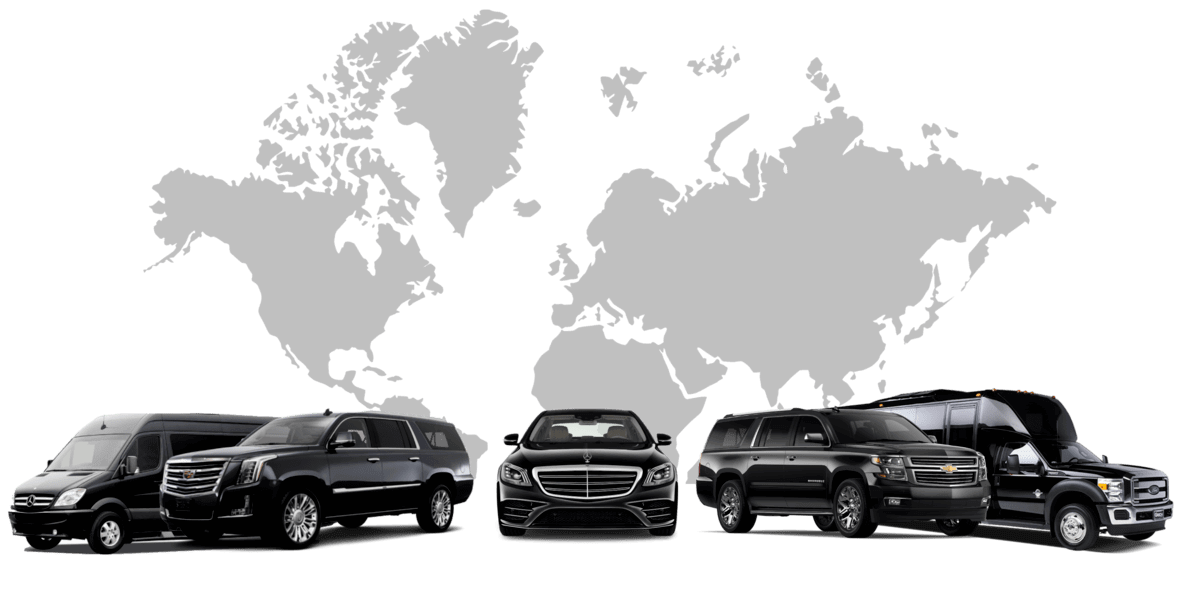
Areas Served
Business or First Class
OUR VEHICLES AND SERVICE ARE SECOND TO NONE